






The Cluj Oncology Institute Wins First Prize at the 2025 Patient Safety Gala
Nov 26, 2025
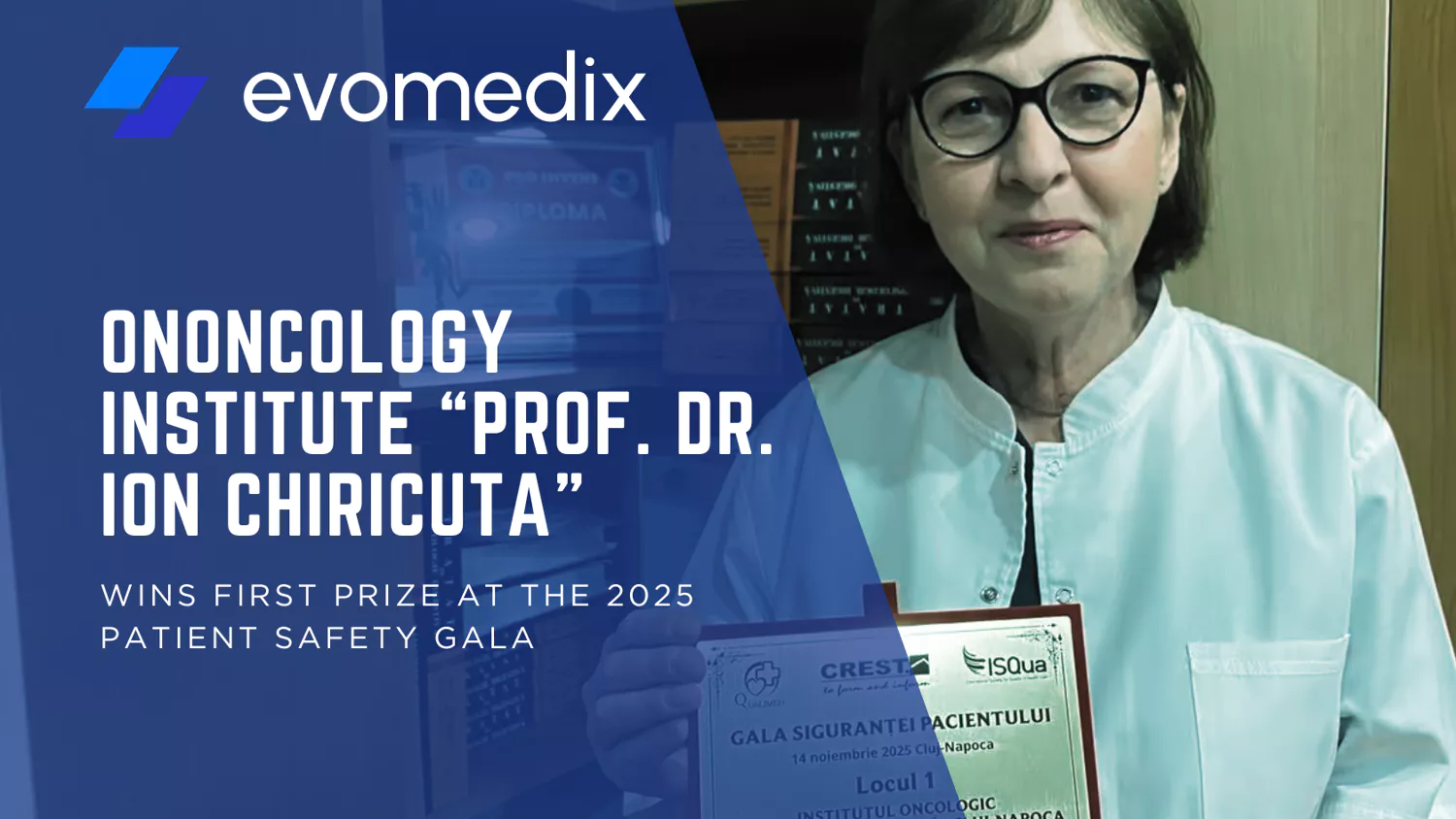
The “Prof. Dr. Ion Chiricuță” Oncology Institute in Cluj-Napoca has won First Prize in the Prevention and Control of Healthcare-Associated Infections (HAI) category at the 2025 Patient Safety Gala. The award recognizes a nearly €6 million project, fully funded through Romania’s National Recovery and Resilience Plan (PNRR), which transforms how hospital-acquired infections are prevented, monitored, and controlled.
A Complex Project: Modern Infrastructure, Advanced Technology, and an Integrated Digital Platform
Coordinated by Dr. Delia Herghea, primary care epidemiologist, the project brings together three major pillars:
1. Development of a new microbiology laboratory capable of delivering rapid, automated, high-quality data for infection surveillance and research.
2. Equipping the hospital with state-of-the-art cleaning, disinfection, and sterilization technology, including autonomous UV-C robots, automated floor-cleaning machines, a plasma sterilizer, ultrasound washing equipment, and a modernized oxygen supply system.
3. Implementing an integrated digital traceability platform, powered by RFID, that monitors in real time:
- patient movement,
- the full lifecycle of sterilized surgical instruments,
- all cleaning and disinfection activities.
This digital system collects data automatically across all departments, reducing infection risks, strengthening quality control, and supporting rapid clinical intervention when needed.
RFID for Patients and Instruments: Safety and Full Traceability
Patients receive RFID wristbands with a unique identifier and a color-coded mobility status—crucial for fall prevention and emergency evacuation. RFID antennas installed throughout the hospital locate each patient every two seconds, providing essential data for infection control, including rapid identification of exposed contacts.
Surgical instruments are digitally tracked from sterilization to patient use, in line with national traceability regulations, eliminating paper logs and decreasing operational risks.
Digitalized Cleaning: Continuous Audit and Measurable Quality
All cleaning activities are recorded digitally. Cleaning staff use mobile devices with barcodes, while head nurses can schedule, verify, and request repeated cleaning directly from the platform. The system also links cleaning activities with microbiological sampling, making environmental control more precise and data-driven.
The Microbiology Laboratory: A Step Toward Automated Infection Surveillance
Once operational, the in-house microbiology laboratory will:
- automatically transmit diagnostic data to the platform,
- generate real-time alerts for clinicians,
- enhance diagnostic accuracy,
- and support advanced research based on internal datasets.
A Passion-Driven Project with National Impact
The project stands out nationally for integrating three digital workflows—patients, instruments, and cleaning—across the Institute’s 522 beds. Implementation was carried out without financial bonuses for staff; motivation was driven purely by professional commitment.
The award confirms the project’s innovative character and lays the groundwork for future digitalization and modernization initiatives.
About Dr. Delia Herghea
Dr. Delia Herghea, a senior epidemiologist at the Oncology Institute since 2002, has decades of experience in infection prevention, quality standards, patient safety, information system management, and antibiotic stewardship. As project manager, she oversaw the integration of ANMCS quality requirements, legal standards, and new digital infrastructure, playing a key role in the project’s success.
Article source: https://cluj24.ro/
A Complex Project: Modern Infrastructure, Advanced Technology, and an Integrated Digital Platform
Coordinated by Dr. Delia Herghea, primary care epidemiologist, the project brings together three major pillars:
1. Development of a new microbiology laboratory capable of delivering rapid, automated, high-quality data for infection surveillance and research.
2. Equipping the hospital with state-of-the-art cleaning, disinfection, and sterilization technology, including autonomous UV-C robots, automated floor-cleaning machines, a plasma sterilizer, ultrasound washing equipment, and a modernized oxygen supply system.
3. Implementing an integrated digital traceability platform, powered by RFID, that monitors in real time:
- patient movement,
- the full lifecycle of sterilized surgical instruments,
- all cleaning and disinfection activities.
This digital system collects data automatically across all departments, reducing infection risks, strengthening quality control, and supporting rapid clinical intervention when needed.
RFID for Patients and Instruments: Safety and Full Traceability
Patients receive RFID wristbands with a unique identifier and a color-coded mobility status—crucial for fall prevention and emergency evacuation. RFID antennas installed throughout the hospital locate each patient every two seconds, providing essential data for infection control, including rapid identification of exposed contacts.
Surgical instruments are digitally tracked from sterilization to patient use, in line with national traceability regulations, eliminating paper logs and decreasing operational risks.
Digitalized Cleaning: Continuous Audit and Measurable Quality
All cleaning activities are recorded digitally. Cleaning staff use mobile devices with barcodes, while head nurses can schedule, verify, and request repeated cleaning directly from the platform. The system also links cleaning activities with microbiological sampling, making environmental control more precise and data-driven.
The Microbiology Laboratory: A Step Toward Automated Infection Surveillance
Once operational, the in-house microbiology laboratory will:
- automatically transmit diagnostic data to the platform,
- generate real-time alerts for clinicians,
- enhance diagnostic accuracy,
- and support advanced research based on internal datasets.
A Passion-Driven Project with National Impact
The project stands out nationally for integrating three digital workflows—patients, instruments, and cleaning—across the Institute’s 522 beds. Implementation was carried out without financial bonuses for staff; motivation was driven purely by professional commitment.
The award confirms the project’s innovative character and lays the groundwork for future digitalization and modernization initiatives.
About Dr. Delia Herghea
Dr. Delia Herghea, a senior epidemiologist at the Oncology Institute since 2002, has decades of experience in infection prevention, quality standards, patient safety, information system management, and antibiotic stewardship. As project manager, she oversaw the integration of ANMCS quality requirements, legal standards, and new digital infrastructure, playing a key role in the project’s success.
Article source: https://cluj24.ro/